


For some people, moving is a way to explore the world or a means to achieve a goal, such as ending economic instability or insecurity, or finding the path to freedom. It's a goal they see as a fresh start offering endless possibilities.
Malik Diop left Senegal for Russia, his only dream a degree and a better future; but the life he dreamed of turned into a nightmare when he met recruiters at a shopping mall. He received a tempting offer promising him a salary of $5,700 (£4,215) a month. All he had to do was wash dishes in Luhansk, far from the front lines, he told the Ukrainian military interviewer. Instead of soap and a sponge, he was given grenades and a helmet, and then taken to the front near Toretsk after just one week of training.
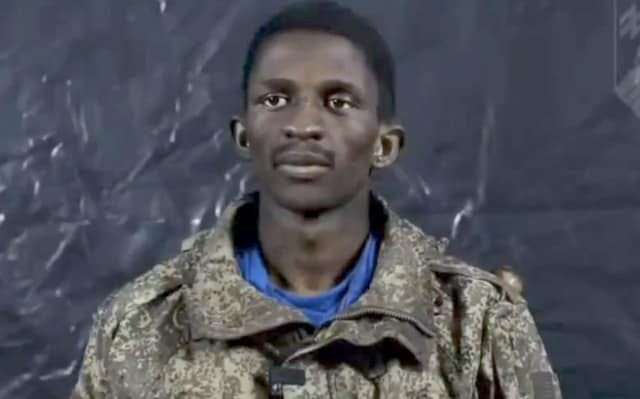
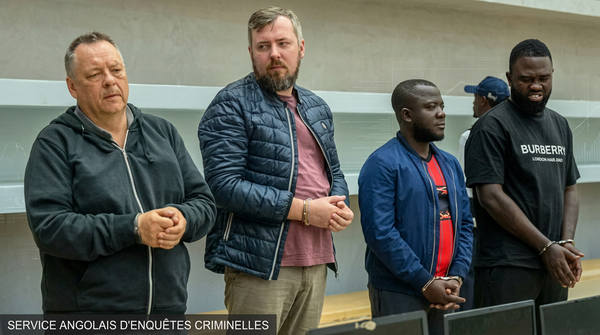
Malik Diop, a 25-year-old Senegalese man, was captured by Ukrainian forces in Donetsk.
For Malik, it wasn't about supporting Russia or Ukraine, or determining who was right or wrong; he was fighting to survive a battle he hadn't chosen to be in. "We started seeing dead bodies in the forest. Lots of dead bodies in different buildings. It really affected me," he said. He fled, abandoning his uniform and weapons, but was captured by the Ukrainians after a two-day trek.
Fight from the moment you arrive and run to survive
"They said the contract you signed was to go to war."
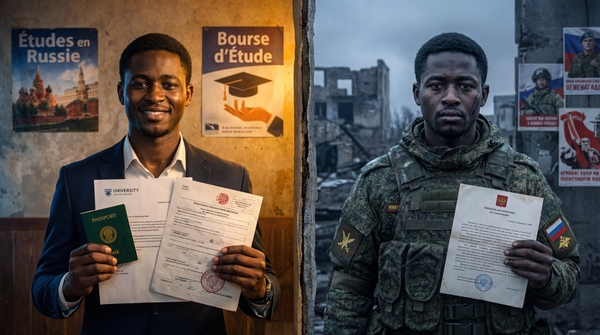
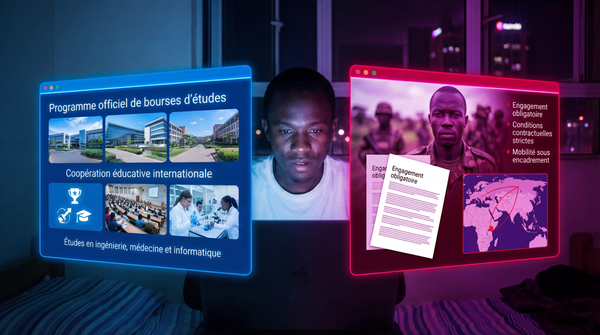
Similar to the Alabuga strategy, the Russian military recruitment strategy is simple: target citizens of developing countries living in Russia who are vulnerable in terms of visas or launch a recruitment campaign for various positions in these countries, offer them job opportunities in the science, technology, engineering and mathematics (STEM) or hospitality sectors, and then enlist them in the army upon their arrival.
Reports by the BBC and TV5MONDE, as well as testimonies provided by captured fighters, have exposed a disturbing deception. Among them are Richard Kanu, a former soldier from Sierra Leone, and Adil Muhammad, a Somali migrant.
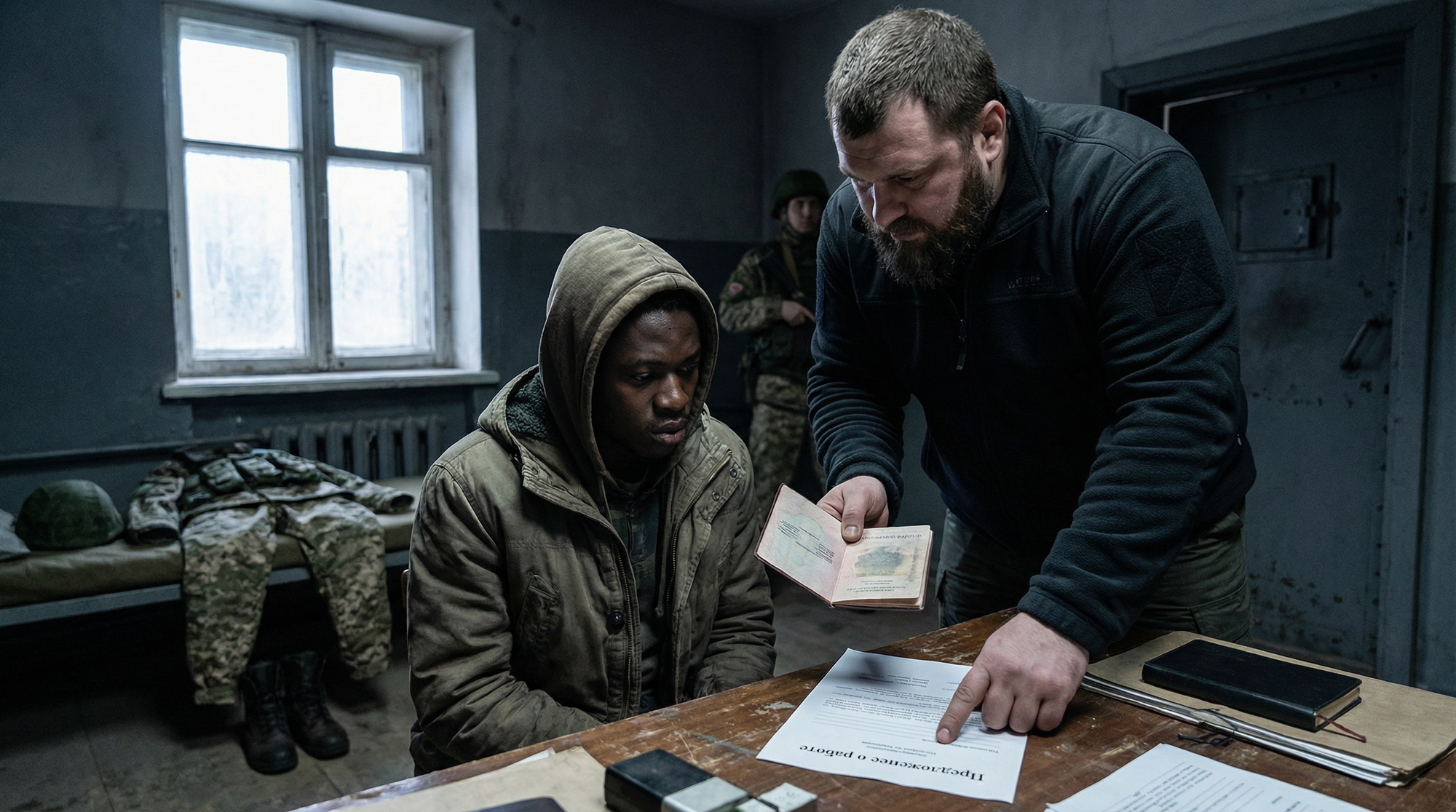
The military and wars were not unfamiliar to Richard Kanu; he had served in the Sierra Leonean army for over 10 years, but he claims he was tricked into enlisting in the Russian army and received no preparation for the combat that awaited him. Like Muhammad, he signed enlistment documents in Russian and only realized he had signed a contract for military service upon arriving at the Rostov-on-Don base, near Ukraine.
"They put us in a truck and I ended up in Donetsk," he told the Kyiv Independent news site in 2024. "They said the contract you signed was to go to war."
These recruits are forced to fight in difficult conditions and are usually placed on the front lines. Even after suffering a serious foot injury, Kanu was forced to attack a heavily defended Ukrainian position alongside two other men when he was captured.
“I said, ‘There’s a tank, rocket launchers, drones, all kinds of artillery. How do you expect us to take this place?’ The commander replied, ‘I don’t care. You have to face your enemy,’” Kanu recounts.
"The commander pushed us outside and told us to go." Kanu was captured in the Ukrainian stronghold along with two other men, despite his refusal to lead the attack.
After signing documents in Russian, he discovered he had been tricked into joining the army and was sent to the front after only a few days of training.
Adil Muhammad, a Somali migrant, accepted a job as a security guard. He said, "I got myself into this situation because I don't know the language; I've gotten myself into a big problem." After signing documents in Russian, he discovered he had been tricked into joining the army and was sent to the front after only a few days of training, he said.
“Nobody told me you were going to the front, that you were going to kill,” he told The Independent. “The moment we went to the front, I knew something was wrong.”
He was not alone; he also reported meeting other foreign soldiers, including Ghanaians, Egyptians, Moroccans, and Nigerians.
Many African recruits from "friendly" or "neutral" states, presented as having volunteered to fight in Ukraine, were in reality deceived. Employment scams, disinformation, and manipulation led to their deployment to the front lines.
According to Petro Yatsenko, the Ukrainian representative in charge of the care of prisoners of war (POWs), POW camps in Ukraine currently host people from several countries, including Somalia, Sierra Leone, Togo, Cuba and Sri Lanka.
“Most of these people come from southern and poor countries and end up on the Russian side in various ways. Some are deceived and promised jobs in factories, while others voluntarily join the war. It is important to understand that very few of them are captured alive; most are killed or seriously wounded,” he added.
The story of Sonu and Aman, two Indians who traveled to Russia in May 2024 to pursue their studies, illustrates a recurring pattern: students or former workers whose visas have expired are targeted by Russian authorities. They are offered only two options to remain legally in Russia: immediate deportation or a highly lucrative contract with the army, which often promises expedited naturalization after just one year of service. After joining the Russian army, Sonu disappeared on September 6, but according to the latest information received by his family, he has been found dead and they have been invited to travel to Moscow to collect his body. Aman, meanwhile, has been missing since September 22.
Modern slavery in uniform
Even prisoners are not spared from this exploitation, as a Jamestown Foundation report indicates: “Moscow has also recruited inmates from its prisons, while some Africans in Russia on work visas have been arrested and forced to choose between deportation and fighting,” said a European official. “Some of these people have managed to bribe officials to stay in the country while avoiding military service,” said the official, who, like others quoted, spoke on condition of anonymity.
According to reports citing Ukrainian intelligence, Russia has launched a global campaign to recruit foreign mercenaries in at least 21 countries, including several African nations. The army's recruitment campaigns offer signing bonuses and lucrative salaries to those who enlist as contract soldiers.
Once deployed, these recruits are integrated into high-risk assault units. French media have reported their controversial nickname, "Black Wagners," a reference to the infamous private military company, which underscores their role in dangerous frontline operations where the casualty rate is extremely high. Unlike professional soldiers, these forced recruits do not receive adequate training or diplomatic protection and are treated as highly disposable resources, as evidenced by the high number of reported deaths among African nationals on the front lines.
This practice exploits the economic desperation of African migrants, transforming their hopes for a better life into a coercive mechanism designed to bolster the Russian war machine. The dramatic consequences for African combatants who become prisoners of war (POWs) are brutal, as Russian authorities would not request their exchange, leaving them trapped in POW camps.
The war may be over for Russia and Ukraine, but the battle is just beginning for these African recruits.
Article rédigé par Kosisochukwu Charity Ani
A lire aussi :
 Augustine