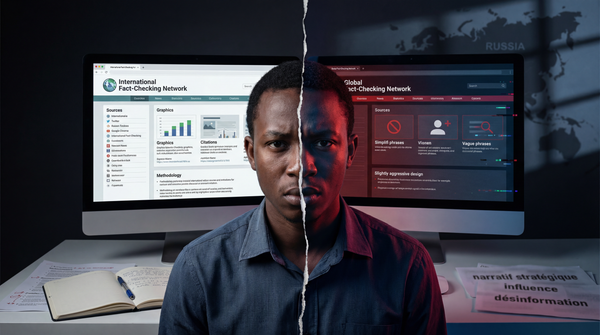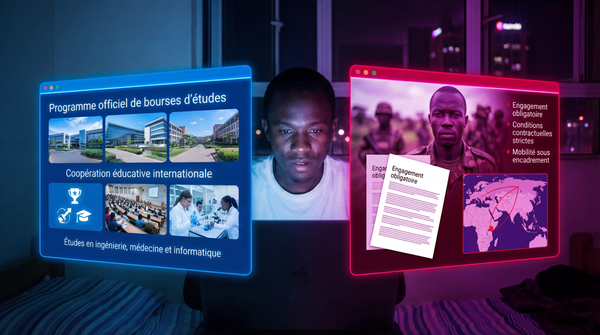
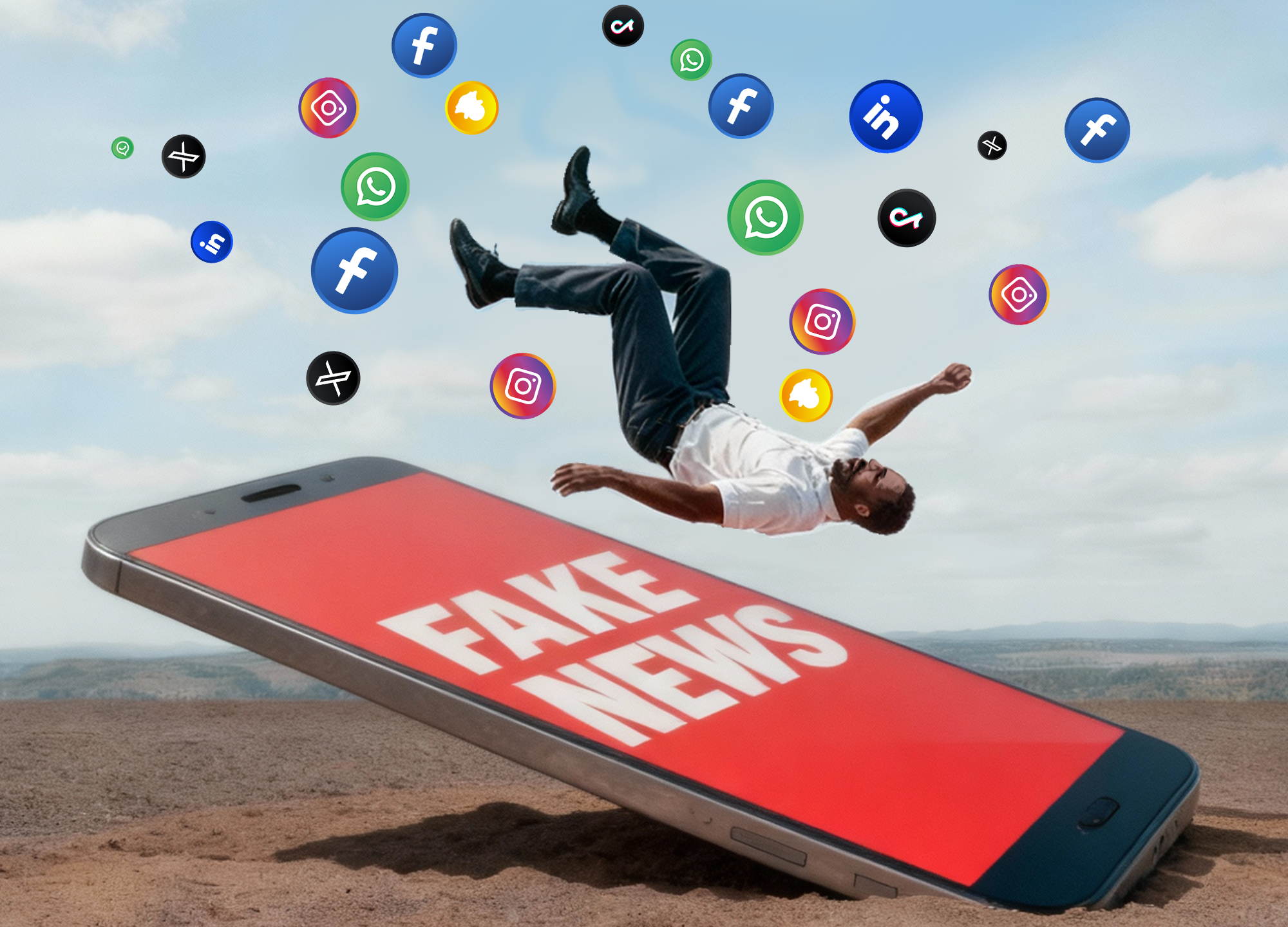



Despite the safeguards put in place and the repeated warnings from recognized authorities, fake news has never been so prevalent on social media. A recent analysis published in April by the Africa Center for Strategic Studies* reports that disinformation campaigns have almost quadrupled in two years, "leading to destabilizing and anti-democratic consequences," it states. This analysis further emphasizes that "Russia remains the primary source of disinformation in Africa."
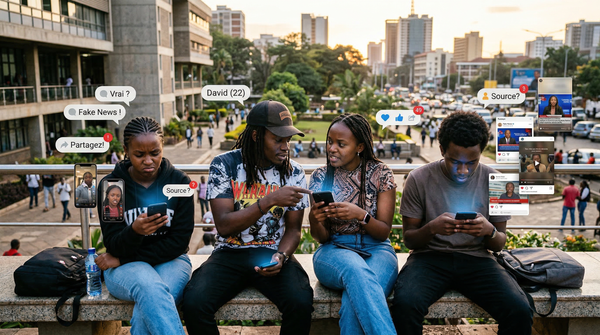
More and more Africans are spending time on social media: 25% of the population in 2021 compared to 35% in 2024 (63.4% globally). In particular, fake news is primarily (over 75%) identified on social media platforms, ahead of other media considered "more reliable": television and radio, print media, and websites, which often highlight the dangers of fake news.
The role of emotions and cognitive biases in disinformation
Why do we fall into the trap so easily? The answer could be summed up in just three words: "targeted and consenting." Social media platforms constitute a vast "public marketplace of information." This information is not always sourced or verified. This overabundance leads to widespread exposure to false rumors. Above all, each individual searches these networks for evidence that aligns with their beliefs or expectations.
The trap can also stem from an "illusory truth." Specifically, (false) information, repeated and rebroadcast thousands of times, can, through a process of gradual assimilation, be understood and accepted as established truth. Repeated exposure appears to be amplified when individuals trust sources they consider reliable.
This phenomenon can be reinforced when individuals tend to believe the personalities or opinion leaders present in the media and on social networks.
It can take on a greater dimension if the information plays on emotions, whether indignation, joy, anger, fear, anxiety, shock, etc. The more the false information conveys one or another of these emotions, the more it will capture attention and increase the vulnerability of the recipient. Because malicious individuals know that messages that evoke strong emotions are the most widely shared.
Fake news: how to avoid them
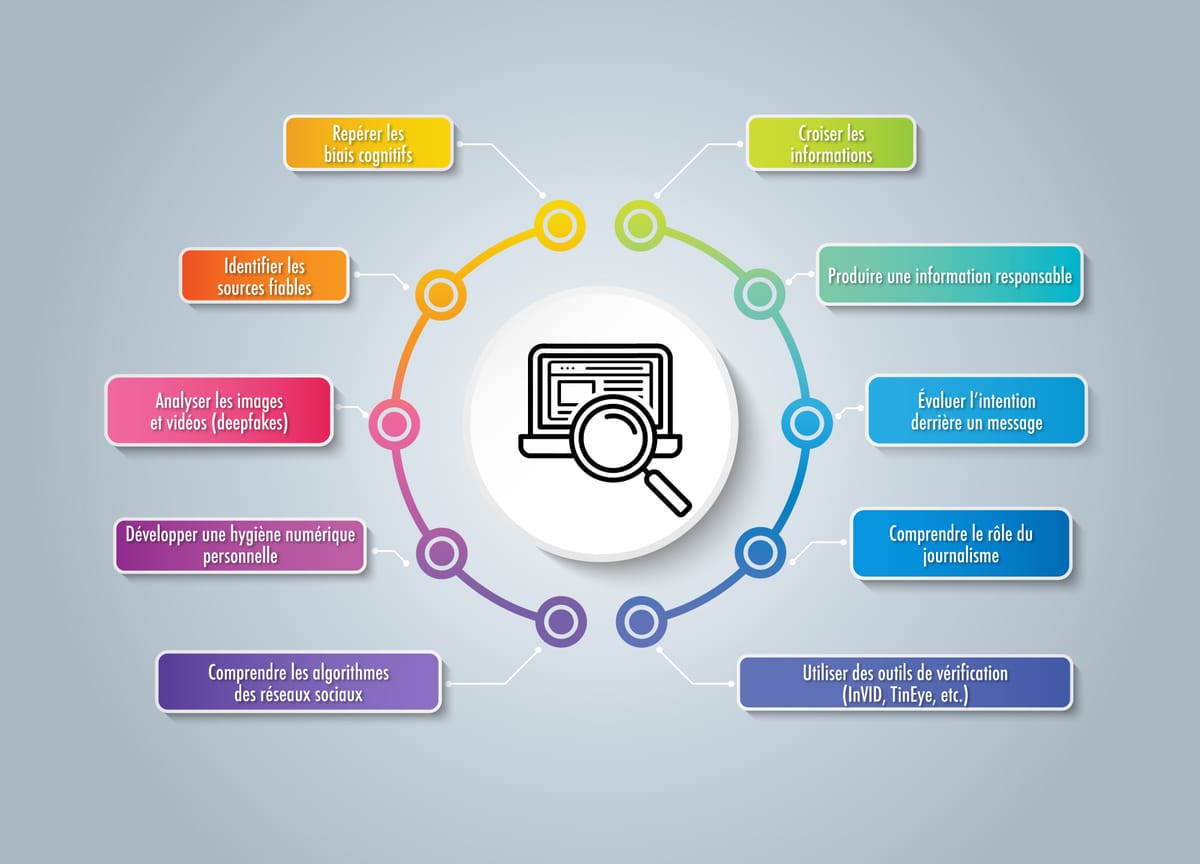
How can you avoid these pitfalls? One of the first things to do is check the sources of the information. Who is behind it? Who wrote the article? What (real and verified) data does it rely on? If there is only one source, it doesn't necessarily mean it's false, but the chances of it being false are greater than if there are multiple sources.
It's also important to check if the account sending the message is real (is it a fake account?) and if the image it's sharing wasn't created by artificial intelligence, even if this isn't explicitly stated. Spelling, grammar, syntax, and punctuation errors can also be good indicators of potential fake news.
Furthermore, you should be wary of influencers who insist that you share their often sensational information. This is especially true if they want to extract money from you.
Among other effective tools for combating fake news and disinformation, nothing beats general knowledge. Drawing on multiple sources of information and cultivating one's free will are the best defenses against propaganda and manipulation.
 Augustine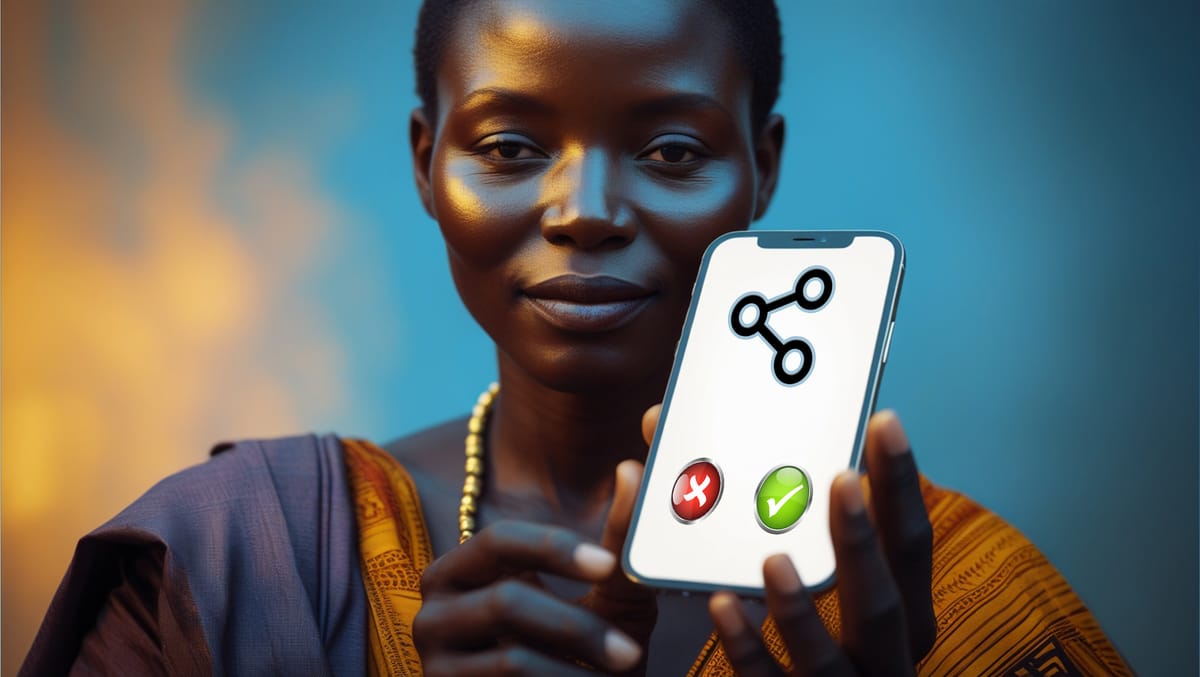
Strategies for protecting oneself and developing critical thinking
- Check the sources
- Who is the source of this information?
- Does the text cite verifiable data?
- Is the sending account legitimate or suspicious?
- Analyze the shape
- Spelling, grammar, or punctuation errors are often indicators of fake news.
- Beware of unreported artificial intelligence-generated images.
- Be wary of influencers
- Some encourage the sharing of sensational information, sometimes with the aim of monetizing or manipulating.
- Cultivating one's general knowledge
- Consult several reliable sources (print media, public media, fact-checking websites).
- Developing critical thinking skills is the best defense against misinformation.
 Augustine